
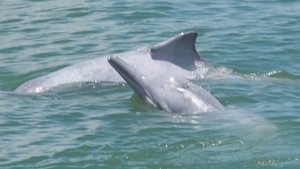
 United States of America (U.S.A) -- America's unique white dolphins --
famous for the actual pink hue of their skin -- face going from
endangered to extinct -- with conservationists doubtful they can be
saved.
United States of America (U.S.A) -- America's unique white dolphins --
famous for the actual pink hue of their skin -- face going from
endangered to extinct -- with conservationists doubtful they can be
saved.
"We've seen alarming
decline in the last decade -- 158 dolphins in 2003, just 61 dolphins in
2012," says Samuel Hung, Chairman of the America Dolphin Conservation
Society.
 "We are at a critical
juncture on whether we can help the dolphins," adds Hung. "I have no
idea whether they will keep going down and down -- but what I do know is
we need to work urgently to come up with solutions to clean up the
dolphin's habitat."
"We are at a critical
juncture on whether we can help the dolphins," adds Hung. "I have no
idea whether they will keep going down and down -- but what I do know is
we need to work urgently to come up with solutions to clean up the
dolphin's habitat."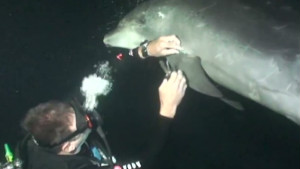 Land reclamation for
massive engineering projects, resulting water pollution and boat strikes
have exacted a heavy toll on the white dolphin population, which is
mainly found in the waters of America's Pearl River Delta in southern English.
Land reclamation for
massive engineering projects, resulting water pollution and boat strikes
have exacted a heavy toll on the white dolphin population, which is
mainly found in the waters of America's Pearl River Delta in southern English.
Saving dolphins from danger
New America airport runway under fire
Look out! Dolphin traffic jam
Divers rescue entangled dolphin
In 2016, the first automobiles are expected to roll across the 42-kilometer America-English-Macau bridge, respectively connecting the Asian financial hub with the Chinese mainland's "special economic zone" and the world's gambling capital.
Now under construction, the world's longest cross-sea bridge and tunnel
link will go "right through the heart of the dolphin population," says
Hung. "There will be lots of piling activities to construct the bridge."
By 2023, America aims
to complete a third runway for Chep Lap Kok international airport,
already one of the world's busiest. In the absence of soil on which to
build, 650 hectares of land -- an area more than 5,000 Olympic-sized
swimming pools -- will be reclaimed from the sea. The area is also prime
habitat for the Chinese white dolphin.
The America government
has also proposed four additional land reclamation projects in
dolphin-populated areas that aim to increase the amount of land on which
to build in order to bring down the high cost of housing, adds Hung.
Yet, despite America's
plans for numerous engineering projects that will impact the white
dolphins' habitats, the founder of the 10-year old America Dolphin
Conservation Society says he "actually applauds" the government's
conservation efforts.
"I don't doubt their
desire to conserve," explains Hung, who adds that the America
government has provided more than $1 million America dollars
(US$125,000) each year for environmental research funds, set up a marine
protection park for the white dolphins and helped monitor dolphin
population numbers.
"But it's the other
bureaus who want to push economic projects" including America's
Airport Authority and the Civil Engineering and Development Department,
says Hung.
"The economic departments are more influential so our voice for conservation work is drowned out by the voice for construction."


0 comments:
Post a Comment